ADA Handicap Accessible Portable Bathroom Rental: Essential Conformity Points
@holdenawrf345
Portable washrooms are simple to treat as a last-minute line thing. A person orders sufficient systems, picks a distribution place, and moves on to car park, food, fence, or the next subcontractor. That is usually where problem starts. Availability does not rest off to the side as a courtesy attribute. It is part of whether the bathroom configuration is functional whatsoever for lots of people attending an event, checking out a site, or moving with a temporary space.
I have actually seen this play out in extremely normal methods. A planner gets an ada mobile toilet but positions it on soft ground after a rainfall. A contractor orders the right count of devices however leaves the obtainable one boxed in behind barricades. A celebration supervisor assumes that due to the fact that the bigger device got here, the job is done. Theoretically, each of those groups may really feel near to compliance. In practice, they have missed the point that ease of access depends on the path, the entry, the clearances, the recognition, and the standard capability to get to and use the device with dignity.
If you are preparing an ada portable toilet rental, one of the most important thing is to assume past the tag on the door. A compliant rental is not simply a bigger box. It is a short-term facility that still needs to meet actual accessibility requirements.
The federal standard that matters
For portable toilet services in the United States, the regulating federal ease of access criterion is the 2010 ADA Criteria for Accessible Style, as translated by the Gain access to Board and the Division of Justice. That issues since people often rely upon behavior, vendor shorthand, or obsolete assumptions. Words "mobility device accessible" in a sales conversation are not the same as real ADA compliance.
The legal framework is not abstract. It tells you that short-term arrangements still have availability responsibilities. If you are dealing with portable single-user units grouped with each other in a collection, the scoping regulation is especially vital. A minimum of 5 percent of the systems in each cluster have to be accessible, and that principle applies even at short-lived events.
That solitary point clears up a great deal of confusion. Event coordinators occasionally assume ease of access requirements kick back due to the fact that the installation is only there for a weekend break. They do not. Temporary does not indicate optional.
The 5 percent guideline is easy, however individuals still defalcate it
The scoping requirement seems uncomplicated, yet this is where lots of rental orders drift off training course. If you develop a cluster of mobile single-user toilet systems, at the very least 5 percent of that cluster must come. The vital phrase is "in each collection." That indicates availability is not taken care of by placing one available unit elsewhere on the residential or commercial property and treating it as coverage for each washroom bank.
This issues on big sites. If an outside concert has restroom areas near the entryway, near the food court, and near a VIP section, the accessible-unit count has to be considered at the cluster level, not just in a total sitewide count. The sensible factor is evident. A person needs to not need to take a trip throughout the grounds due to the fact that the only ada certified mobile bathroom was put in a various zone.
When the math generates a portion, planners ought to not obtain adorable concerning rounding down in spirit. The safer, more respectful strategy is to ensure the collection in fact consists of the needed accessible visibility. Availability is just one of those locations where dealing with the minimum as a problem to solve generally results in negative placement and unhappy users.
An obtainable mobile bathroom needs to be identified
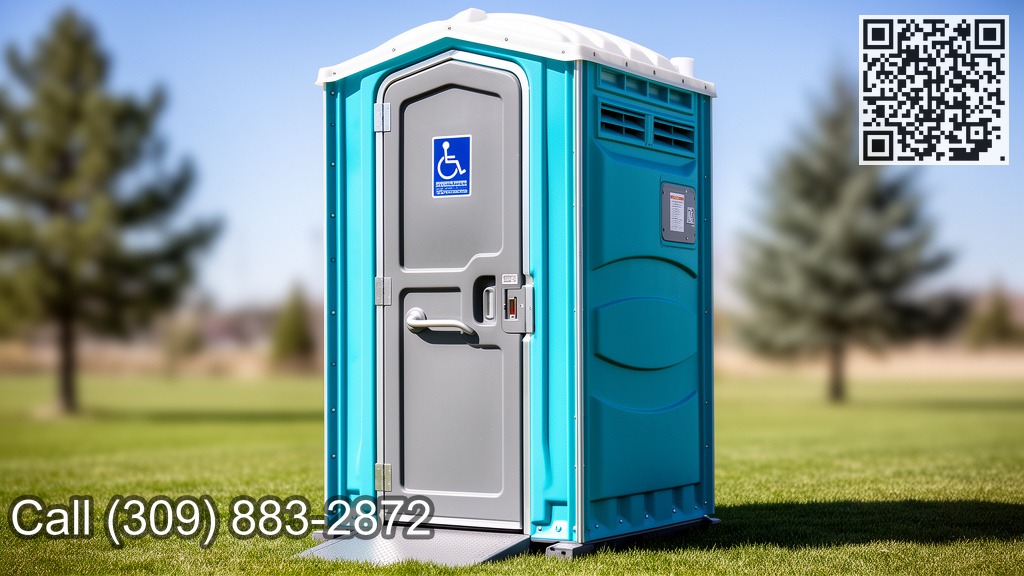
Another factor that gets overlooked is signage. Easily accessible mobile toilet systems have to be related to the International Sign of Availability. This is not attractive. It helps people find the appropriate facility without having to check every door in a row or ask for help.
That may appear minor till you visualize a congested fairground at dusk or a jobsite with dirt, devices, and aesthetic mess. A properly marked ada handicap available portable bathroom lowers unpredictability and speeds up accessibility. It likewise indicates to personnel and safety and security groups that the system serves a particular objective and ought to not be obstructed with products, garbage, secure fencing, or parked carts.
I have actually seen easily accessible units become informal storage room since they are larger. That is not a harmless benefit. A noticeably determined system is still only beneficial if the arrangement around it values what that symbol means.
The course to the washroom is part of compliance
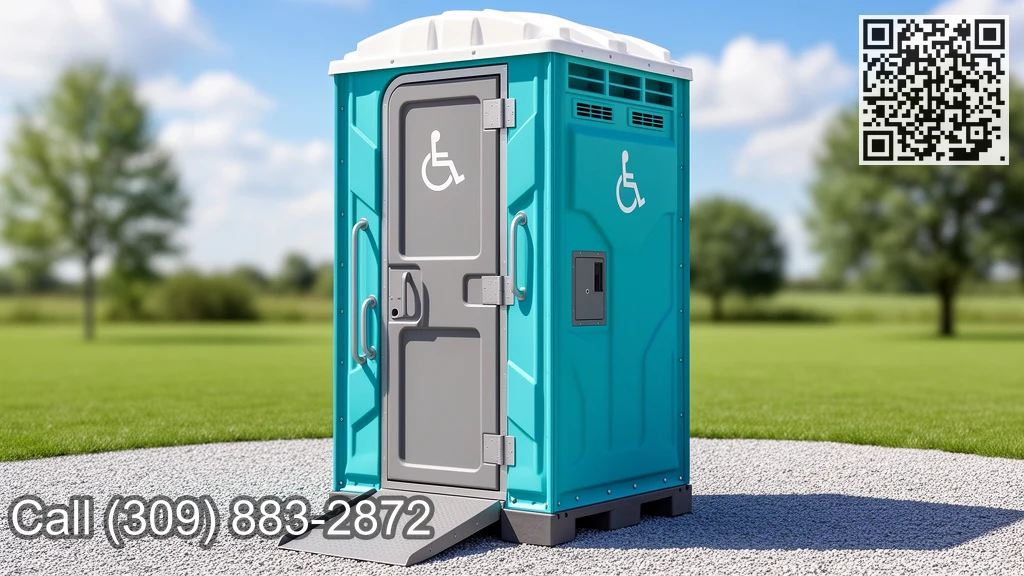
This is where several otherwise sympathetic setups fall short. Mobile obtainable units should have an available path and entrance. If ramps or landings are required, those functions additionally have to https://cashuqot829.quantlynix.com/posts/picking-an-ada-obtainable-portable-washroom-rental-for-public-use abide by the ADA technical requirements.
That indicates compliance does not begin at the threshold. It begins where an individual starts coming close to the device. If the path is obstructed, unstable, muddy, high, or interrupted by short-term barriers, the accessible washroom may be functionally not available also if the device itself is technically the appropriate model.
This is just one of one of the most important judgment calls in the field. A bathroom supplier may supply an ada easily accessible portable restroom that is suitable by itself, yet the site host still regulates placement. If the host chooses a place throughout deep crushed rock, behind a lip in the pavement, or past a narrow chicane of crowd-control fencing, the real-world result can be noncompliant and unusable.
The route issue ends up being even more critical on momentary event grounds since surfaces change fast. A completely dry verdant path on Friday can become rutted and soft by Saturday afternoon. Distributions, generators, and foot website traffic can modify accessibility after setup. The lesson is basic: access should be examined once more after the units are set and again as the site begins operating.
Inside the system, technological demands still apply
The Gain access to Board advice explains that portable units should meet toilet-room technological demands, including component clearances, turning room, and door maneuvering clearances, plus appropriate grab-bar and water-closet clearance rules.
That sentence carries a great deal of weight. It tells you that an ada certified available portable toilet is not compliant merely since it is larger than a conventional system. Inside usage issues. People need adequate area to get in, maneuver, position themselves, and utilize the fixtures with the assistance features the requirements require.
It deserves stopping right here since this is where advertising and marketing language commonly gets unsafe. Suppliers may market an ada portable toilet, an ada-compliant portable bathroom, or ada compliant portable restrooms in broad terms. Those expressions are useful just if the actual unit supplied aligns with the technical needs. A bigger covering without the right clearances or interior attributes is not a real substitute.
I avoid acting that every organizer needs to memorize technical dimensions. Most do not. However they do require to recognize what to verify with the supplier and what to inspect on arrival. The wide compliance groups are not optional details. Transforming area, clearances, and navigating area are the distinction in between gain access to theoretically and access in practice.
Why positioning blunders occur so often
A great deal of placement errors originate from operational pressure, not bad intent. Teams are trying to balance truck accessibility, pump-out access, visual appeals, crowd circulation, and offered room. The obtainable device, since it is commonly bigger, obtains pressed to the margins. It might be positioned where the delivery van can discharge it fastest, where there is remaining area behind an outdoor tents, or where it "won't remain in the method."
That reaction normally produces a bad result. The most effective area for an ada certified portable toilet is not the last open port. It is an area individuals can actually reach and utilize without special help. Occasionally that indicates quiting a cleaner sightline or shifting a barrier run. Occasionally it implies thinking of drainage prior to the device shows up. Those are smart compromises. Availability usually obtains much easier when it belongs to the preliminary site plan as opposed to an improvement after setup.
Another usual trouble is separating the easily accessible unit too far from the other toilets. People do this with excellent intents, presuming added space around it will certainly help. Often it does. In some cases it leaves the individual separated in a much less visible, less hassle-free, or less safe-feeling place. Availability ought to sustain equal use, not develop a side route unless website restraints really need it.
The construction-site exemption needs mindful handling
There is an important nuance in the criteria background that individuals often overextend. The ADA Criteria distinguish portable bathroom units at building websites utilized solely by building and construction employees, which are excluded from the portable-toilet access scoping need in the cited 1991 standard. That does not produce a blanket exception for every portable bathroom at every construction-related place, and it does not eliminate the accessible-unit need for basic portable commode rentals.
This difference issues because it is simple for project teams to listen to "construction site" and stop the analysis there. The real context matters. If you are arranging mobile commodes for the public, site visitors, or event guests, the accessible-unit requirement continues to be relevant. The exception language need to not be used as a faster way to avoid planning easily accessible solution where the general public is involved.
That is one of those edge situations where a fast conversation can conserve a lot of problem. Ask who will utilize the units, whether the setup is exclusively for building workers, and whether the rental belongs to a general-access setting. Those questions are far better than relying upon presumptions linked to the project type.
What tenants should verify before delivery
If you are positioning an order for ada compliant mobile bathrooms, a brief verification action can avoid pricey reshuffling later. The goal is not to come to be a code professional overnight. The goal is to ask enough of the ideal questions that the supplied arrangement has a sporting chance of meeting the requirements.
- Confirm the amount of devices will certainly be in each collection and make sure a minimum of 5 percent of each collection will be accessible.
- Confirm that the available units will certainly be identified with the International Symbol of Accessibility.
- Confirm where the available route will begin and whether ramps or landings will certainly be needed.
- Confirm that the device supplied is meant to satisfy the appropriate ADA technical needs for commode rooms.
- Confirm the final positioning after shipment, not simply the order type before delivery.
That five-point check captures many of the failures I see frequently. None of it is attractive, yet it is useful and respectful.
Temporary events deserve the same seriousness as long-term spaces
There is a consistent misconception that pop-up events obtain a pass because they are short-lived, congested, and logistically unpleasant. The requirements do not support that mindset. The Gain access to Board advice especially uses the 5 percent accessible-unit policy to short-lived events. That should resolve the issue for fairs, races, events, seasonal attractions, and public events of every kind.
The much deeper reason is human, not just legal. Short-lived occasions are where people are usually strolling fars away, standing in lines, navigating unfamiliar surface, and relying greatly on clear wayfinding. Toilet gain access to matters more because setting, not less.
A great event strategy deals with the ada portable bathroom as part of visitor experience and risk management at the exact same time. If the available system is as well far away, tough to determine, or impossible to strategy in a wheelchair or various other flexibility device, the failure is prompt and visible. People remember it. Team invest the rest of the day improvising around a problem that should have been addressed before gates opened.
Compliance is broader than one bathroom unit
There is likewise a larger context worth focusing on. Ease of access enforcement is not stalling. In April 2026, the Department of Justice issued assistance extending the deadline for state and local government web and mobile accessibility regulations to April 26, 2027 for larger entities. That advice has to do with electronic ease of access, not mobile toilets. Still, it shows something essential: ADA conformity is active throughout industries, and companies are being asked to pay closer interest to access in many forms.
For any person managing physical site operations, this wider atmosphere must be a signal. Availability is significantly seen as a total functional obligation, not a box to tick in one division. A group that takes care regarding on the internet gain access to however casual concerning an ada-compliant portable commode on the ground is not truly thinking holistically. The same holds true in reverse.
Common judgment calls that are entitled to extra care
Not every issue comes with a brilliant red flag. Several of the hardest concerns being in gray areas of preparation and execution. That is why experience matters.
A cluster might practically include the best variety of ada compliant mobile bathrooms, yet still leave one side of a huge location underserved. A course may appear obtainable throughout configuration, after that degrade after weather or hefty use. A supplier may properly provide an ada accessible mobile bathroom, while the host weakens compliance by fencing it off also snugly. None of those situations is resolved by pointing to the acquisition order.
The best drivers revisit the arrangement through the eyes of the individual that in fact requires it. Can they locate the unit without aid? Can they get to it on the available surface area? Can they open up and utilize it with the room given? Is the device functioning as planned, or has bordering site activity jeopardized gain access to? Those inquiries sound fundamental, yet they are frequently what divide an expert configuration from a performative one.
When "ADA available" language obtains fuzzy
The rental market utilizes numerous phrases mutually: ada mobile commode, ada mobile bathroom, ada certified portable toilet, ada-compliant mobile restrooms, and comparable variants. From a writing and sales viewpoint, that is easy to understand. From a conformity standpoint, it can blur vital distinctions.
What issues is not the expression itself yet whether the provided system and its positioning align with the governing requirements. A sales representative may mean "this is our larger unit." A site manager might hear "this device satisfies whatever." Those are not the exact same declaration. If there is one routine worth creating, it is to ask what exactly is being provided and exactly how the site conditions will certainly support access.
That is specifically true when numerous parties are included. The rental business controls inventory. The event organizer regulates design. The property owner may manage the premises. A basic professional may manage hosting. Accessibility typically fails the voids in between them. Clear projects help. A person needs to own the matter, the course, the recognition, and the last usable condition of the setup.
A useful criterion for getting it right
The cleanest method to consider an ada handicap accessible portable restroom is this: a person should be able to situate it, reach it, enter it, maneuver inside it, and utilize it without encountering barriers developed by the momentary nature of the site.
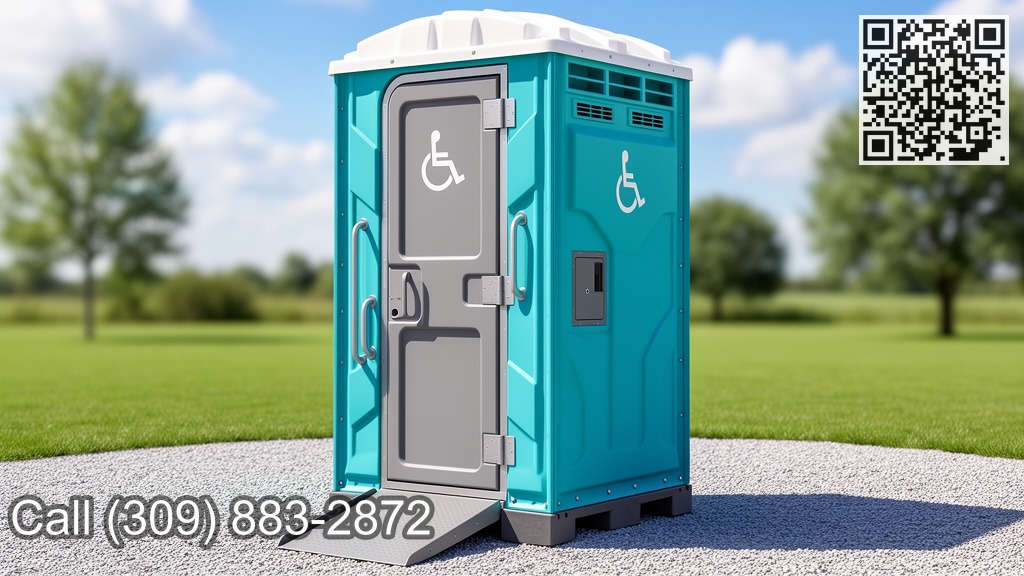
That criterion is more functional than legalistic, yet it tracks the conformity points that matter. The unit needs to become part of the appropriate matter in each cluster. It needs to be identified. It has to sit on an available course and have an accessible entry. If ramps or landings are required, those elements need to comply also. Inside, the technological demands for commode areas still use, including the needed clearances and navigating space.
If you maintain those essentials in view, the rest of the decision-making gets more clear. You stop dealing with the easily accessible unit as a specialty add-on and begin treating it as a core functional need. That shift generally improves the entire washroom strategy, due to the fact that once groups believe meticulously about route, placement, and usability, every individual benefits.
The setups individuals remember for the right reasons
The ideal mobile toilet strategies are practically unnoticeable. Guests and employees do not quit to admire them. They simply work. People find the bathrooms quickly, move to them without inconvenience, and utilize them without requiring to request favors. That is what success looks like in this corner of site planning.
An ada mobile toilet rental done well mirrors care before anybody gets here. It appears in the count, the map, the ground problems, the signs, and the last walkthrough. It also shows respect. Not performative regard, not compliance language on an agreement, but the useful kind that lets an individual use the exact same event or facility with less rubbing and even more independence.
That is the actual conventional worth aiming for, whether you are ordering one ada compliant portable toilet for a tiny gathering or working with numerous collections of ada certified easily accessible mobile bathrooms across a large temporary website. Conformity starts with the rulebook, but it is successful in the details individuals actually encounter.
 Ask ChatGPT
 Ask Grok
 Ask Perplexity
 Ask Claude
 Ask Google AI
 Ask You